
Episode Transcript
Anika Jackson 00:01
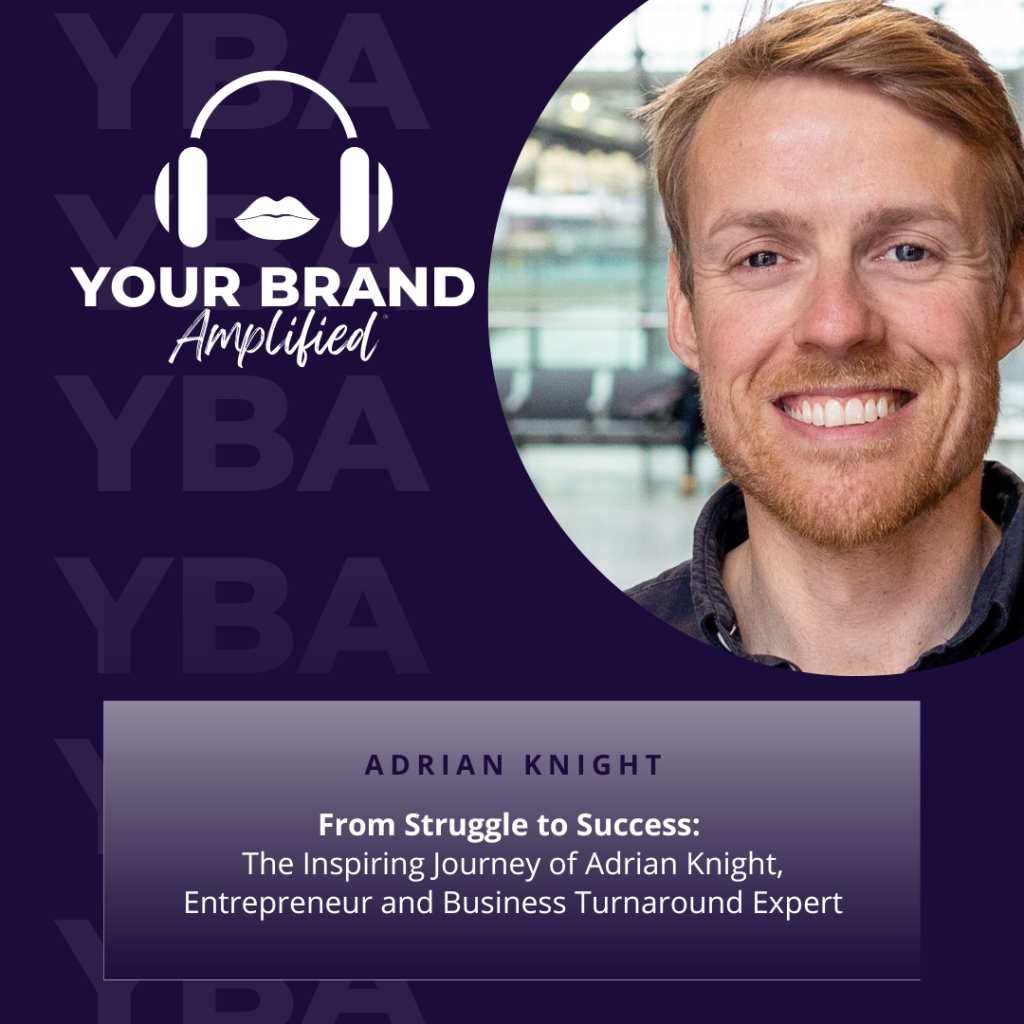
Welcome to your Brand Amplified, the podcast where we interview marketers, publicists and brands to learn their stories, what makes them tick and tips and tricks that make a difference. I’m Anika Jackson on your Brand Amplified, and today I have a guest who is a very successful acquisition entrepreneur, business turnaround expert, children’s educational company owner and many, many other things, and now I think, endurance athlete and adventurer. But Adrian Knight didn’t started out that way. At 19, he had a nervous breakdown which led to a series of situations and epiphanies that led him to who he is today. Adrian, thank you for being here.
Adrian Knight 00:43
Thank you so much, Anika. It’s an absolute pleasure and honor to be here. It really is.
Anika Jackson 00:48
Well, I’m just thrilled to have you on and share your journey, so let’s get into it. What led to the nervous breakdown? Were you in school? Were there things going on in personal life?
Adrian Knight 00:59
Yeah, I had a nervous breakdown when I was 19, and there was definitely a build up to it, but it didn’t happen in the way. It was kind of the last thing I expected, to be honest, because I come to that point, life was amazing. So just a few years earlier, as I went on a stiff day, I was a bit like I’d really overweight and I had this sort of moment when we were on vacation up in Scotland, up in Loch Ness actually, when I sort of walked past the mirror, just saw myself and I was just completely startled because the person there at back at me I was like so I’m here, is it? I was genuinely taken back and following on from that, so I made a decision that I was going to lose weight and ideas and I lost In Britain which I sort of stowed inside. I don’t know what the power of conversion is, but like over a 10 month period it was about seven, eight years, Eight stone, I believe like there was a lot of weight that came off and I completely transformed and all of a sudden I was this whole new person which led into very active social life and just having a great time. And then, when I was sort of following on from that.
02:05
Over the next couple of years I went to what we call college, which is like a higher and, I think, like high school, like sort of the high school, and went through my exams there and then after that decided to go backpacking around Europe and I had just the most amazing trip. But it was when I came back from that and, on a complete high, I went into my first job, which was as a bricklayer. And from then I don’t know what happened. I just felt like everything was slipped in a way and over a period of a year it got progressively worse. I was not turning up to work. I was being requested to go and see the senior leadership of the business and just didn’t go like it.
02:47
It just wasn’t a healthy situation and it all came to a head when there was this one particular event that happened, that work and I was like this is like no more. So I went to see doctors and they signed me off they don’t have a notice breakdown. I was given a lot of medications, sleep and tablets, so we weren’t sleeping and I remember going home to my parents’ house and sitting on my bed in my room with these tablets, with the medication in my hands, looking at it, just thinking this is not the way Like this does not feel like the way like this medication. So I decided that I was going to put that to one side and, however painful her at all took, I was going to figure this out and just go through it naturally. And then I think that was the real starting point of albeit very painful journey with many ups and downs over my 20, the next 10 years.
Anika Jackson 03:41
Yeah, I really appreciate you sharing that because I think so many times people see the success right, they see who you are now, but they don’t know what you had to do to get there and how you had to work on yourself and what demons you might have had to face. And I relate to your story in some ways because there were things that I wanted to do, places I wanted to go for school that I didn’t get to go because of this or that or the other. My parents wanted me to stay in one place or it weren’t going to help me fund it, and I was afraid to take that leap myself and it put me back years on my educational journey, my work journey. But I wouldn’t take those years back because they made me have the perseverance and the strength and fortitude that I have today, which I’m sure is the same for you. Like, looking back, you’re seeing how these things helped build you and helped you get to the point where you can be who you really are, and that’s a lot of what you’ve been working on right In your journey is how to prioritize self-development and well-being, and it’s so hard for us.
04:38
We hear these words and we’re like, yes, we know we need to prioritize things. We have these five tasks. We need to do so. How did you figure out how to course correct and how to set yourself on a different path, because perhaps you weren’t meant to be a bricklayer right? That clearly was not the right job for you. You didn’t want to be there. There were other things that you must add, whether in your subconscious or conscious, that were dreams and aspirations.
Adrian Knight 05:01
That’s just it. I look back at that period and I recognize now what attracted me to being a bricklayer was I just wanted to build, like I just had the urge to build room. Throughout my whole life and I’ve always been interested in property and, yeah, I just wanted to build and so my natural instinct was to go and be a bricklayer, perhaps. Yet that environment. I just very quickly realized it wasn’t a bad environment. I just wasn’t happy there and that was probably as simple as it was really. But that’s just it. Like go about some point. So over the last couple of years in particular had a lot of people approached me saying how are you doing? What are you doing, like really want to know, and they’re asking because I want to know, like how can they do the same? I massively respect that and I’m really open with sharing with people.
05:51
I always find myself going back to these stories, not because I look what I come through, but because I also speak to a lot of people who want to do things but coming up against the same challenges, I just kind of want to say like it’s like, it’s okay, like this is just stuff to work through, my how I got onto the sort of like prioritizing person development or prioritizing my own sort of growth was I sort of recognized that I had these aspirations.
06:17
I wanted to build a business, I wanted to do this and to do that, but there was one commonality that always stopped me, and it was me Like I had all of these issues that were preventing me from doing what I needed to do. So I had a problem with, I had a very bad relationship with alcohol, which I didn’t realize until my sort of latter twenties just how unhealthy that relationship was. I mean, I’ve been alcohol free now for over five years, but that was practically stopping me because, rather than get enough work in my business, I was waking up late with a hangover, and so it was these type of issues, when I can’t do business, to like figure out and address this like alcohol situation as an example, and so, yeah, it was just like funny how it all sort of came about. So, looking back, I’m incredibly grateful for those challenges and the de-religion because they, let you know, led me to places I actually wanted to go.
Anika Jackson 07:13
Yeah, so talk about that journey. You’re also an author, which I think has a lot to do with how you’ve created this life for yourself. But you left the job, you went, and what did you do after that? Traveled, take other jobs before you started your franchise business.
Adrian Knight 07:29
Yeah. So I left the bricklayer job and decided to go to a university. So the college purely because my girlfriend at the time was going and I didn’t want to be left behind. And I got accepted to the university. I got accepted to study architecture but decided that seven years of academics I was associated for that. So I ended up going and seeing study construction management in a city just outside of London, and actually just outside that city now, and I lasted three weeks because I was going into the course.
08:02
I was really excited but then started to look around and started to find out more about his career path and I remember to say to myself I just can’t imagine myself spending the next 40 years of my life doing this and it just seemed ludicrous to me to then go through a three year educational program.
08:19
That was something I didn’t want to do but sort of happened. When I first went to university I started a student business. So I started a business focus on students and that took off quite quickly. So I ended up staying for three years having an amazing time, not having a great but all of the social benefits of going to university, but I wasn’t actually studying and I mean I kind of was getting a different type of education. But I’ve done that for three years and at the end of that period, when all of my friends are graduating, I quickly sort of came to the conclusion that I didn’t want to be 30 years old and still do in there. So it was time for me to move on as well and go into the real world. Wow.
Anika Jackson 08:58
So then, what was your next step? And were you still with the girlfriend? Did that relationship last?
Adrian Knight 09:04
No, it didn’t. Unfortunately it’s the end of the period, didn’t? Yeah, it was real shame. But yes, I went into IT sales and at the end of the day I started in the trade deal and promoted quite quickly and I moved through the ranks until team manager, but I was still having a lot of these like personal battles. I mean, my confidence was just rock bottom After that nervous breakdown, like it was just so bad I couldn’t look people in the eye and I was a shell on myself, which I can’t quite believe, because the environment I was in I mean, it’s part of the reason why I went into that environment was to bring myself out, and it did to an extent, but it didn’t really like.
09:44
I only sort of half-sold some of those issues and then after a couple of years I decided that I was going to go traveling and pick up the traveling again. But the decision to go traveling was different. Whereas the first time it was about exploration and adventure, this time it was about the monies. It was about running away from myself and those demons. So I remember getting the flys out to Thailand and basically locking myself up in one of the wooden cabins there Didn’t come out like I, was just almost like a cruise for yeah, for quite a while and worked all the way around Southeast Asia, but yeah, sort of with a little inter-social interaction as possible and yeah, it was a weird time for one and stuff.
Anika Jackson 10:27
Yeah well, did that when, by escaping right and running away and not being a social, did you become more introspective and start working on some of those inner things, or did you still put walls up in front of yourself?
Adrian Knight 10:39
So my best mate from university roving in letter when he found out I was going traveling and told me not to open it until I got on the plane. And so I did it, and I got on the plane and it was really I still got the letter. It was a really lovely letter and he and he basically said, I hope I find Kind of what I’m looking for, and so it was all myself. But his big concern, having known me for quite some time, was that introspection is like for myself and to the context of myself. It’s good that you take the time to reflect and so, you know, go inside yourself. But he had noticed with me there was a balance and that it could go the other way, in which he could become unhealthy. And that was very much where the place I got to in that trip and, yeah, I stayed there for quite some time. If I’m honest, it wasn’t the health of the table. Yeah, reflection, you know.
Anika Jackson 11:32
Wow. So then what happens next? You’re so, you’re in Southeast Asia. You’re not being correctly, if you could say, introspective, if you’re not finding and getting to the point that you need to get to what helped you. Finally, was there an aha moment? Was there an event that happened?
Adrian Knight 11:51
I gradually made my way down Asia to Australia and I wanted to spend New Year in Sydney, which I was just was sort of made the sugar I was. I think I’ll probably still be in that cabin now in the entire land. Yes, I made it to Sydney and then I decided to head over to Perth for some reason. So is when I was in Perth again, I was walking past the TV and as someone was watching, I was watching, I walked past the TV, the clothes, I was staying, and I heard this comment on the TV where someone said coffee, you’ve got caffeine, it’s really digs it and like we all know this, like we were, it’s nothing new. But the way it was said and I think just that frame of mind I was in really hit me and struck a chord. Jess has that chord a bit in shock where I was in a little connect with the way and I was doing some of the coffee that because I was struggling to sleep and, like all these different upstate up late and but I but not tired and I was driven so much coffee and the main decision not to drink coffee for I think it’s about a week and this was Perth, so it was 40 degrees Celsius, the locals were seeking out on the beach at night because it was so hot and there was having a heat wave as well. And two days after making that decision to stocking coffee for just a little while, I came down the biggest withdrawal since I’d ever seen. I was shaking, wetting. I was with a couple of English people who were some feeding me, some like English cold and food tablets, and I was like is this the hole that Kathy had over me? I was in complete shock over it and I’ve actually drunk coffee since then.
13:24
I think it’s been about 12, 13 years now, but it was shortly after that that scene moment, and must have been a week, couple weeks later, when I just came to the inside, that actually I didn’t want to travel, I wanted to go back home and I wanted to start building the business, and that was the only insight I had, and it’s nothing else. Only that was probably the thing I wanted to do right there. And then I started to try hoavings and started my yeah, unsuccessful entrepreneurial journey at Aafoy. But the reason I tell the story of the coffee is because one of the things I have really observed the notice over the years is that most success has come from subtraction, and what I mean by that is I always thought that to be successful, it was about adding the skills, it was about adding the sin, adding that nobody’s more in fact like, it’s very.
14:17
It’s a show of me, my personal experience, that we’ve been completely opposite. It was when I took away the alcohols, when I took away the coffees, when I took away the smoking and took away, like all of the vices. Essentially that’s when my life started to propel forward. It was taking things away. That seems to me seems forward and yeah, I just, whether it’s connected or not, being so closely after all of that time of traveling and then, within like a week or two or you know, deciding to take out the caffeine and the coffee element, coming to that insight, just yeah, it feels connected.
Anika Jackson 14:50
It’s very connected and it doesn’t have to be something that’s considered a vice right. It could be all of the different things we say yes to in our daily lives, and I feel like, especially as we get older, we realize that the more you say no to, the less distractions you have, the more clarity you have on the things that are really important, and so I feel like that was a huge aha moment for you. You took away these vices one by one, by one, and then didn’t take very much time for your brain to say, ok, now you’re ready.
Adrian Knight 15:20
Yeah, it’s so counterintuitive but makes complete sense at the same time. Like the logical sense it’s hard to get to. Yeah, it is so. Yeah, but it is absolutely very much serious and it goes back to what I said earlier. So I had these aspirations, but I was the one getting in the way of it, and so, by taking those behaviors out that was getting in the way, I stopped getting in the way and then started moving forward.
Anika Jackson 15:47
Definitely. So you came back, and what next?
Adrian Knight 15:52
So my 20s were hard. I had a really hard time in my 20s because what came next were the best part of it, just under. Yeah, it was up until I, sort of around until the 30s, seven or eight years of business failure after business failure. So I had 12 failed startups. I mean I had periods and it was just adamant that that was my path, as bizarrely as that sounds.
16:16
I remember my dad saying to me why don’t you just stop this and get a job and why don’t you just do this? But it was coming back to that authenticity of what we’ve seen like prior and prior to recording. And I just knew that wasn’t my path. I knew this was my path and I couldn’t figure out why I couldn’t make it work. I just thought I’m going to do this, I’m going to do this, I’m going to do this. And I remember getting all philosophical and my daddy should tell like if I keep failure, it just means that it’s setting the foundation for something bigger, with a mold up. And he’s just looking at me like, are you mad to go and get a job? But I really felt that, like I really believed that and it did lay the foundation for my career going like taking off as an entrepreneur, a business owner, but in a slightly different way than I thought it would.
Anika Jackson 17:01
So what was the emphasis behind the business ideas? And I think you’re a perfect example. There are people who become entrepreneurs because they have one driving passion and they’re tired of, maybe, their mid-career professionals. They’re tired of doing that and they want to pivot and switch. And then there are people who I think are born entrepreneurs. And that sounds like you. And what people don’t realize is the entrepreneurship journey is not instant success. There’s a lot of failure, a lot of lessons learned that help us almost fail up to the next level, and so it sounds like that. I’d love to hear what you’re opinion on that and also, what kind of companies were you trying to start?
Adrian Knight 17:39
Yeah, so I completely agree with everything you said there, entirely. I really agree with that. And what I’ve also noticed is that there’s different flavors of entrepreneurs. And this, I think, was when the penny dropped to me, because I am a terrible startup entrepreneur. I’m terrible, like going from like zero revenue to say a million revenue. Like I’m not the guy, that’s not me. But what I recognize as I started getting into world of buying and selling companies was that oh, wait a minute there’s different types of entrepreneurs, so I’m more suited to businesses that are sitting at one to two million revenue and taking over to five million and 10 million, but even then the levels change. Again, I’m not the person to take it past 10 million. Like there’s different flavors of entrepreneurs.
18:28
And that was a great insight for me as well, because the entrepreneurial journey is hard and its success is achieved by fading up or fading forward. So you’re fairly familiar, but every step is taking me closer to it. But my big problem was, like in the context, was it comes up with the idea. I was great at being able to see this is where it can go, almost validating that idea, like in terms of being able to validate that idea of that and improve, and then to start buying people into this and to get things moving. Get things moving, bringing a lot of energy, but that’s where I’ll stop, and so that only done very so far. You then need to start designing systems and processes and building out the operations side, which is where I just felt flat on my face time and time and time again.
Anika Jackson 19:18
Yeah, operations is definitely when you’re the creative person who has the ideas. I think operations can be very difficult for us. Yeah, we’re like we know these things, we know we can see us going there, but oh yeah, we need these systems in place so that we can duplicate this and other people can come in and help us build this. Are you ready to take your brand to new heights? Join the Brand Amplifier for Entrepreneurs Program. Learn how to build, elevate and amplify your brand with a comprehensive 10-model course. Learn more about it and other ways to implement our strategies at fullcapacitymarketingcom. Click on EFCM Learning Hub for more information. Can’t wait to help you amplify your brand. So at what point, then, did you get into franchise?
Adrian Knight 20:12
So after my sales startups, the relationship has come up to my sales team birthday and my friends the same guy who had written me that letter for the play. He was working for a technology, a global tech company, and said do you want to come in on a contract in IT sales? And I stick it because I literally didn’t have any money. I think I was 29 and still living with my parents because I’m really in and out, but I’ve been back more time. Well, yeah, I’ve been back so many times and I need to get out here. And so I took that job and I had the scum for franchising because I actually wanted to move over to the US.
20:54
My friends and family have always said do you want an American born in the wrong country? Like I just love anything that comes with, like the mindset. It’s just yeah, I’ve always been very attracted to it. I wanted to see if I could have a better chance of success and building a life in America. But the visa situation you need money for that. And so I said have any scientific contracts.
21:17
And I started exploring about how I can different ways to get in the visa and I discovered that starting a business was a great way. But an even better way was buying franchise. So I was like, oh, franchise, and for me that was just like with Donalds and Dominoes and flashing neon signs. So I started to make into it and I immediately fell in love with the concept of franchising, which is take something that works and you replicate it.
21:40
And a very long story short, I ended up flying out to California training in franchise recruitment and went back to the UK and started presenting franchising to the senior corporate professionals who wanted to move out of corporate but had an into business ownership but didn’t want to take the risk. And that was my business concept and I left that contract, started that business, figured out how to get it going and just me from the first three years and built up a very small team. And that was probably the most successful startup I had, but more actually the most successful failure I had, because I never actually made any money from it. I just loved it. I just loved speaking to the people and the sector.
Anika Jackson 22:23
Amazing. And now you have the spectacular group.
Adrian Knight 22:28
Yes. So things really changed for me when I thought I was going to be dad’s to my beautiful daughter, evie, who she’s now four, and when I discovered that I spent a lot of time reflecting, but in a more healthier way and still a lot of running and walking and this sort of asking myself what type of dad did I want to be? And I’m a very hands on dad. I’ve always seen myself as hands on. I wanted to set up like mystery tours and go on mini adventures and just get involved and always be there for about five times and stuff like that.
23:03
But I knew that I could do that when I was working every hour under the sun and not running off, you know, not only enough to be able to support. And so I’d always liked this idea of buy the set of businesses and I decided that if I was ever going to do it, now was the time and I am done a little bit of training, but basically just threw myself into it and within three months of talking everything like the my dad since when, all in, I acquired my first company, which was a 30 year old franchise or a consultancy, and I bought that for one pound and actually exited that last year for a very healthy six figure sum and that even I hadn’t exited at the time. That was like the bug. I thought this is cool because all the stuff I was struggling with was already in place.
Anika Jackson 23:50
Right, so amazing. So what does everything look like now for you?
Adrian Knight 23:56
Yeah, so that first acquisition led me on to founding spectacular group, which is a children’s education group, so that was founded in 2020. And within two years I founded that pure different acquisition that went up to a multimillion revenue. We’ve currently bought just under 20 employees and we educate just under 10,000 under five year olds every academic term here in the UK. So that’s been great. But my earlier lessons are sort of to show me not to be into business, so I’m in a very lacking position where there’s a very particular people in there building that and running that, but I’m not in their day today. So I I mean I own the business. I take in salary from the company, but I’ve got a role of free time which I use to, yeah, mainly sort of lock endurance events and being that hands on dad’s.
Anika Jackson 24:46
Amazing. Well, I want to talk a little bit about your book. So you are author of a book. Change your Career, Change your Life, and was that based on all of the experiences that led you to figure out how to be your most authentic self and create businesses and your success?
Adrian Knight 25:03
So when I was helping senior professionals transition out of corporate life like that was a big part of it, because I mean how to team up people. But certainly in the years when I was like on the phone every day, like several appointments a day, I spiked thousands and thousands of these corporate professionals who’d reached the points in their careers where they had very successful careers but their priorities have started to shift in their personal and professional lives and they were far too young to retire. They had all these other challenges they wanted to do but also they were kind of stuck because they built these great lifestyles that were supported by their corporate projects and so that book was very much talking about that point in someone’s career and how they can start to transition away from that and it helps a lot of people transition away from that, not just into franchising but into other stuff. So the book was largely written with that both sort of insides I guess, and yeah, it was good fun.
Anika Jackson 26:04
Yeah, I feel like that’s something a lot of people are looking at now is wanting to make a change, not wanting to work for corporate, wanting to have a little more quality of life if that’s possible when you run your own business. Yeah, yeah, Right.
Adrian Knight 26:16
Yeah, yeah.
Anika Jackson 26:16
So what would you say are some of the skills, because there are a lot of businesses that people are willing to sell. There are a lot of businesses that are run by original founders who are now ready to retire and move on to enjoying their lives, that are available. I know here in the United States whether it’s a franchise or a business. So what should people keep in mind when they’re thinking about making that shift into purchasing an existing business, and what skill sets do they need to have?
Adrian Knight 26:42
It’s a great question because there’s a couple of things. The first thing to keep in mind is that there is this huge wave of baby boomers that are retiring and I believe I don’t know how accurate it is, but I’ve seen this figure a lot but it’s around 10,000 baby boomers are retiring every day in the US and the majority of small businesses are owned by baby boomers. So this huge amount of like businesses out there but it’s not a cute bit of people like lining up to buy them, and so the owners of these companies are in a very difficult situation because they spend the best part of their lives building these companies in 10, 15, 20 plus years, and they always had the idea that they would sell it, that it’d be their retirement or their goals to these things. But they actually come up to the first hurdle, which is no loss to buy it. So if you’re in that corporate position, the first thing to recognize is that there’s a lot of opportunity outside of corporate Like there really is.
27:37
Second thing to recognize is that small business owners tend to be kind of going back to the local government to emit a lot of them, certainly from the hundreds of spoken to, from an acquisition perspective. They tend to be the practitioners that have gone into and known the business. So they are the bakers who know, are in a bakery and they are. All the mechanics are in the garage and if you’re coming from the corporate world, you have a skill set that is just alien to them because in many cases you’ve done leadership training, management training. You’ve been in those corporate environments. You know how to operate within a corporate environment and outside of that. Well to you, you don’t even recognize that. I’m not going to recognize it.
28:21
About pit out as a small business context Wow, you can do amazing things. But the challenge there that I’ve seen a lot of people have is those who are poor in corporate and trying to come out. They’re speaking a different language. They’re speaking corporate language where small business language is very different, so there’s a language discrepancy as well. Then there’s so many other like sort of caveat for things. But fundamentally, if you’re in that corporate career, there are a lot of options out there. You don’t have to stay in corporate. There are so many options out there and it’s just on to explore and seeing which ones can work for you.
Anika Jackson 28:56
Yeah, I don’t know how many people today have read Emus, so I’m going to link that in the show notes because I really caught those reference. I’m like, yeah, exactly yeah, that is the thing you have to consider. Because you’re passionate about something and you think you wanted to, your career doesn’t mean you have all of those other business skills that you need to do it. Like you said, a lot of people who start businesses are practitioners, but coming from corporate, you do get all these other skills sets and knowing how to work with different types of people that you might have to work with to grow the business.
Adrian Knight 29:28
I was going to say exactly that. And the trick to buying small businesses is you don’t want to go in being all about the finances. You want to go in and it’s about understanding where that business owner is at Like, what are their motivations? And it ultimately comes down to being a people person. The longas have to stack up, but you don’t have to go in first conversation for five minutes. Right, let me see what’s your top line. The bottom line is like it’s not about that. It’s about why now you know what’s going on, what’s happening, that so people come into this corporate environment. They know how to operate from a people perspective. Otherwise they wouldn’t have gone up the rounds to where they have. If they couldn’t, then, yeah, they wouldn’t have actually.
Anika Jackson 30:12
Nice. Well, and speaking of finances, how did you fund your initial businesses? Because you know, having that many startups, were you able to get funding Like? Did you have savings? Did you have to go to the bank and get a loan? Did you have friends and family investing? How do you start a business, or how do you buy a business, if you don’t have those assets set aside?
Adrian Knight 30:31
Yes, brilliant question. So I never had any money. The startups fell largely because they run out of cash before and I could never afford to bring the people into cool level skill sets, and so I was still going. And that was the great insight was that many ways with skills to start a business and it is to buy one, because the key with starting the business is like you’re figuring everything out, so you have to have enough cash to figure out and validate your business model. But you need to do that before you run out of cash. With the established business, it’s already been figured out so you can go into a vehicle that’s already running.
31:06
But I’ve done nine acquisitions now and I’ve not actually put any of my money in at all. I’ve structured deals in a way in like I don’t think wrong, like I’ve paid for a single business. I lost a position, you know hundreds and hundreds of thousands, but I never actually put any money in of myself. And the money on the consideration on day one was in Renewable. I mean, it was 10,000 pounds which was paid on payday one, but I had raised things in such a way so that by day second of ownership I’d actually got 30,000 out.
31:41
And so you don’t need money to buy, but you don’t need those of cash. You definitely don’t want to be picking your house on the line or going into your savings to do this, because I was in a position where I simply didn’t have the money. But what I recognized in hindsight was I’m really happy I didn’t have the money, because when you buy a business it’s highly risky, like if you buy a property, you’re getting bricks and mortars and got some land and you could physically touch it. But when you buy a small business, you’re essentially getting contracts and people. Obviously, you can’t buy people and they’re not a small business is the contracts they have. I worked paper to written on and most of them don’t even have contracts in place, and so there’s a high degree of risk there, and putting all your money on the table to buy it is just ludicrous in my mind. It’s about working out with the seller what do they want, what are the top and frames, and coming in it like a wing-wing perspective.
Anika Jackson 32:37
Nice, yeah, so doing maybe some seller financing which makes them happy because then they get a steady check to them right, instead of just a lump sum? That I think. A lot of times when people get lump sums, they’re not responsible with it. It was a different scenario, but I was hearing about lottery winner in Los Angeles who got like the billion dollar lotto and he’s buying houses all over the place and fancy cars and completely changing his lifestyle. That money is going to run out because that lump sum billion isn’t really a billion, it’s less than that. It could still be plenty to live on, but if you’re not being smart about it, yeah. So I imagine that would be very reassuring, also because they know that you’re going to be a good steward of their company and their business that you’ve taken over.
Adrian Knight 33:20
That’s just it. You have to earn that trust, because there’s also the other side of that as well. What do you take over the business and you mess it up. So it goes back to that relationship and being the people side and and speak human and being really authentic, like really transparent, and approaching it from a moral and ethical standpoint of look, I want to make this work. I believe I can make it work. This is what it needs to look like. This is what you’re looking for. How can we get you that in a way in which we’re all protected here? And that’s essentially the essence of the conversations I have. It doesn’t happen on the first conversation and only takes several conversations as we sort of build that trust, but that’s pretty much it, rather than going in with it’s a free time multiplier and you’re going to get X and day one. It just doesn’t work at this level.
Anika Jackson 34:10
Yeah, interesting. So, as you went on this journey of self discovery and figuring out how to get to success for yourself, and what that looks like as well for yourself, what are some of the habits and tools that you would recommend to others, because you said that you’re also especially the last two years you’ve been helping advise people on how they can achieve that Right, thanks, so.
Adrian Knight 34:34
So when people have been approaching me over the last couple of years, how you doing this? And I hadn’t really like given it much thought. But when I really thought about it I recognized that it was directly correlated to what effort I was putting into growing myself. And so I have a very structured some personal development plan and routine and distructure that I follow. That is the secret source to like, genuinely the secret source to all of it. So I, you know, I work up 4am, I read 10 pages, I meditate, I visualize, I exercise and I do a variety of other things throughout the day which I probably thought I was above everything else, like literally everything else, because what it does is you can take, say, the wake up time.
35:21
Before I used to wake up and go straight to dad mode or go straight into work mode and I would be at, say, level two or level three version of myself.
35:30
Now I wake up and spend the first three hours investing in myself, right, investing time and building myself up.
35:36
So when I come back from the gym and I said 7, 7, 7, c, a, m and I walk through the door when I see my daughter there, I’m a different type of down with different person and then I’m going like everyone to the day, so I’m going into the day is like a level seven version, level eight version, which, when pretty much everyone else is operating at level two or level three, you do start out and people notice it and it has a very tangible impact in terms of I know that I’ve had opportunities that I just wouldn’t have before.
36:04
I made the attack on which it equaled financial gain that I just wouldn’t have before. So I structured that in a particular way and I actually share a lot of this on my Instagram profile. So I post on Instagram several times a day and it goes back to what we spoke about at the very beginning, which is I just want people to see the reality of what’s actually going on. Like I still wake up and I feel anxious, but people don’t see that. They see the car, and so I’m sitting in the car on my Instagram doing stories saying I woke up feeling really anxious this morning. But these are the reasons why and this is how I felt, but this is what I’ve done about it, and so I don’t know how. This is the question, but it’s so much like.
Anika Jackson 36:47
No, I mean, and I know that Instagram is one place we’re going to share in the show notes for people to go to and follow and see your routine Are you turning this into a course? Are you going to be doing some mindset talks or coaching or another book? I think all of those things would be valuable.
Adrian Knight 37:04
Yeah, so this has been so powerful for me. I was also about six months ago I was getting fed up of basically trying to pull this together over like several different apps and websites. I was tracking my food on this one. I was tracking my exercise on this one. I was tracking, like, certain habits on which to that? And I decided this had been such a game changer that I was basically going to put it together under my own app. So I built my app, which was purely self-ish for me and so on.
37:31
There I literally run my life through it. So like, boom, I’ve become a critical task list I’m going through and it’s set up in a way in which I can add other people to that. And I had no intention, but it didn’t go intentional when I done that. But then people approached you and like, come on, let me show you, and that’s kind of taking on a bit of a life of its own without really sort of trying. So, yeah, if any of that sells of interest, then the best thing would be to just follow me on Instagram, send me a message and I can just show you and just talk. People like through it, because I genuinely, day by day, run my life by the extent it’s a game changer.
Anika Jackson 38:08
Amazing. Do you have a favorite quote or mantra, family motto, words of wisdom that help you with your day to day?
Adrian Knight 38:16
Well, I never know off that, the one that always goes around my mind and has done since I, since that nervous breakdown. Actually it was you’ll be greatest investment you’ll ever make. And it just reminds me that I remember reading a line in Stephen Covey’s said and habits of polydrector people, which was for every thousand, striking at the is like the leaves of evil. There’s one striking at the roots, and I always connected that, thinking that we are the roots, like you are the roots of your life, and it ties directly into the greatest investment you ever make. And, yeah, the last 15, 20 years have just proven that is when the focus has been on growing and investing in myself. That’s what’s limited, else to care of itself.
Anika Jackson 39:00
Yeah, amazing, Adrian. Is there anything else you want to share about your journey or any advice that you have?
Adrian Knight 39:08
If I was listening to this and going through a hard time whether that be diction, whether it be anxiety, whatever those problems are just to recognize that it is okay, like it is normal, and we will get this to stop when people will talk about it, and that you can work through this stuff. It’s very often the case you just put one foot in front of the other and move them forward, rather than get in. You know, so caught up in everything, keen or over analysis, and just going round and round and before you know it, a year’s gone, gone by. So I just want to say that it is okay. A lot of people experience other situations and just move through it step by step to focus on the next step, and it will gradually start to work as well.
Anika Jackson 39:56
Thank you for sharing that. This has been such a fun conversation, very inspirational, and if you want to follow Adrian Knight, you can go on instagramcom Adrian J Knight, as a knight in shining armor, to follow him and get all of his advice. Find out more about his app. Maybe you’ll release it eventually and in the app store or something I can see your next business venture, yeah thank you, yeah, so thank you for taking some time.
40:23
I know it’s late in England, so I really appreciate you coming on and sharing your journey and your story, the good and the bad, and how it helps you really become the whole person that you are today that we see in front of ourselves.
Adrian Knight 40:36
Thank you so much. It truly is a great pleasure to be here. I’m really honoured to be on here and just yeah, please keep them doing what you do it’s. I’ll listen to a few episodes right now and oh well, this is the next one, the next one in here. So yeah, it’s really good sort of stories and inspirational content on here. So, thank you.
Anika Jackson 40:56
Awesome. Well, thank you, I appreciate that. And speaking of which, listeners, if you like this episode, give us a rating and review on Apple and Spotify, good pods or wherever you’re listening to this podcast. With that, I’ll be back again in a few days with another amazing guest sharing their story and I’ll put all the stuff in the show notes so you can follow Adrian and learn more about his different companies and following them to get inspirational content. Being his Instagram. Want more? Check out amplifywithanika.com or follow me on socials at @amplifywithanika.